


Hangi yapay zeka olduğu fark etmez. Promtu siz değil yapay zeka yazsın.
a) Önce yapay zekaya resmi yükleriz. Ardından bana bu resmin ayrıntılı promtunu ver diye yazarız.
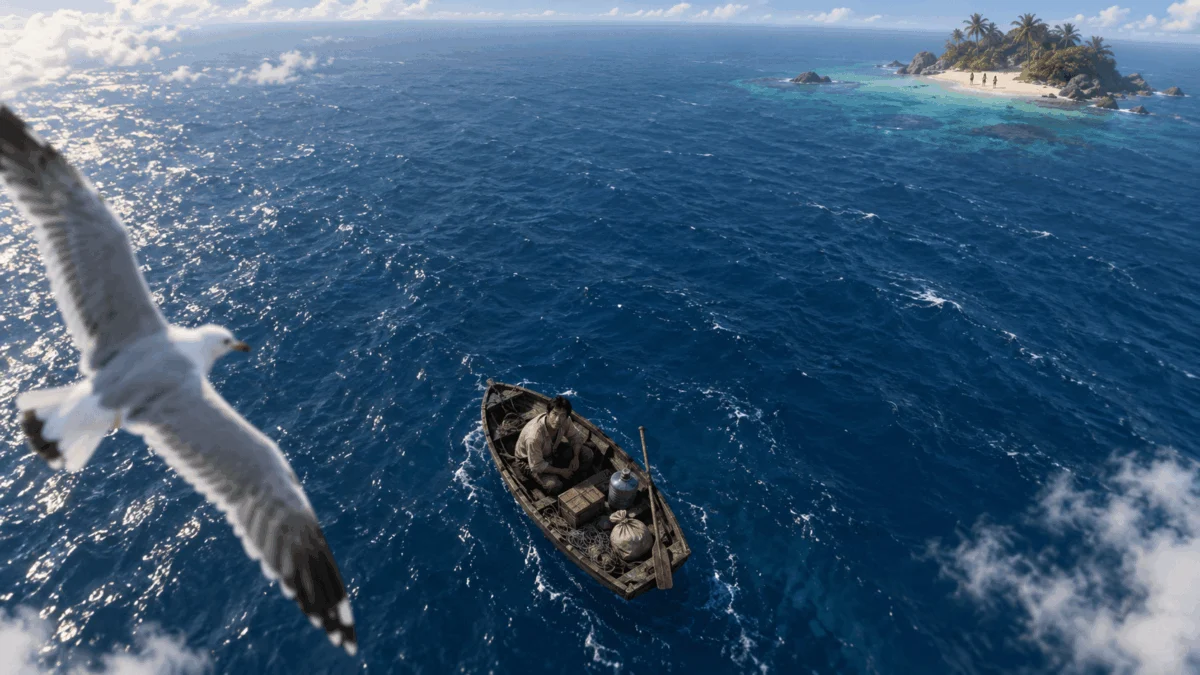
Ultra-wide cinematic aerial survival scene over a vast open ocean, viewed from the high oblique perspective of a flying seagull, as if the camera were mounted near the bird’s eyes. In the extreme foreground on the left edge, a large white-and-gray seagull is partially visible in flight, wings spread wide and slightly motion-blurred, reinforcing the bird’s-eye viewpoint. Far below, near the lower center of the frame, a small weathered wooden rowboat floats alone in deep cobalt-blue ocean water. Inside the boat sits a solitary middle-aged East Asian man with slightly messy black hair, sun-worn face, simple faded beige-gray shirt and dark trousers, looking upward toward the bird with a tired, thoughtful, slightly hopeful expression.
The wooden boat looks old, scratched and handmade, with visible planks and rough edges. Inside are scattered survival belongings: a wooden crate, coiled fishing rope, fishing net, a large blue-gray water container, a tied canvas sack, a wooden oar resting along one side, a few small supplies, weathered bags and simple tools. The man is seated among these belongings rather than posing dramatically, creating a realistic castaway atmosphere.
The ocean must dominate approximately 80–85% of the composition, emphasizing isolation and scale. The water is dark deep blue around the boat, with realistic rolling waves, white foam, sun reflections and subtle turquoise patches beneath the surface. The boat should appear very small compared with the enormous ocean, increasing the feeling of loneliness, distance and vulnerability.
Very far away in the upper-right corner of the frame, close to the horizon, there is a small tropical island surrounded by bright turquoise shallow water and coral reef. The island has clean white sand, dark volcanic rocks, lush tropical vegetation and several tall palm trees. On the beach, several adult women are visible only as very small distant human figures, standing or walking near the shoreline. They should be clearly recognizable as people but remain tiny because of the enormous distance; they are not the main subject. The island should feel like a distant possibility of rescue, almost dreamlike but still photorealistic.
Bright daytime tropical atmosphere, late morning sunlight, clear blue sky with scattered soft white clouds concentrated near the horizon. Strong sunlight creates sparkling highlights across the left side of the sea. High dynamic range, realistic atmospheric haze toward the horizon, slight aerial perspective, natural ocean colors, realistic scale and depth.
Camera composition: 16:9 landscape frame, high-altitude aerial shot, approximately 60–70 degree downward viewing angle, strong depth and scale, boat positioned around the lower-middle third, distant island positioned in the upper-right third, seagull partially entering from the left foreground. The horizon line should remain visible in the upper section of the image. Wide-angle lens feeling, approximately 24–28 mm equivalent, cinematic framing, deep focus across ocean and island, slight foreground motion blur only on the seagull.
Visual style: cinematic photorealism, realistic documentary adventure photography, survival-film atmosphere, subtle dramatic storytelling, natural colors, physically accurate ocean reflections, highly detailed wooden textures, realistic skin and clothing, believable tropical lighting, no fantasy elements, no exaggerated saturation, no artificial CGI appearance. The visual narrative should immediately communicate: one isolated man lost at sea, observed from a seagull’s perspective, while a distant tropical island with people represents hope and rescue.
Output: 1200 × 675 pixels, 16:9 aspect ratio, deliberately moderate / slightly low resolution, natural photographic softness, compressed documentary-photo feeling, no text, no captions, no logos, no watermark.
İsterseniz buna ayrıca şu negative prompt da eklenebilir:
Negative prompt: cartoon, illustration, anime, painting, fantasy ocean, giant boat, luxury yacht, modern motorboat, multiple boats, crowded scene, close island, oversized people on island, children, distorted human anatomy, extra limbs, deformed hands, duplicate objects, unrealistic waves, floating objects outside boat, unnatural turquoise entire ocean, extreme HDR, oversaturated colors, fisheye distortion, drone visible, text, logo, watermark, frame, poster design.
Bu promptta özellikle “martının gözünden bakış + küçücük sandal + dev okyanus + çok uzakta umut veren ada” üçlüsü kompozisyonun ana omurgasıdır.
b) Ardından kendi resminizi yapay zekaya yükleyin ve “Sandalda bulunan adamın yüzünü benim resmim ile değiştir” promtunu yazarız.
c) İsterseniz tüm adımları tek bir promptta toplayabiliriz.
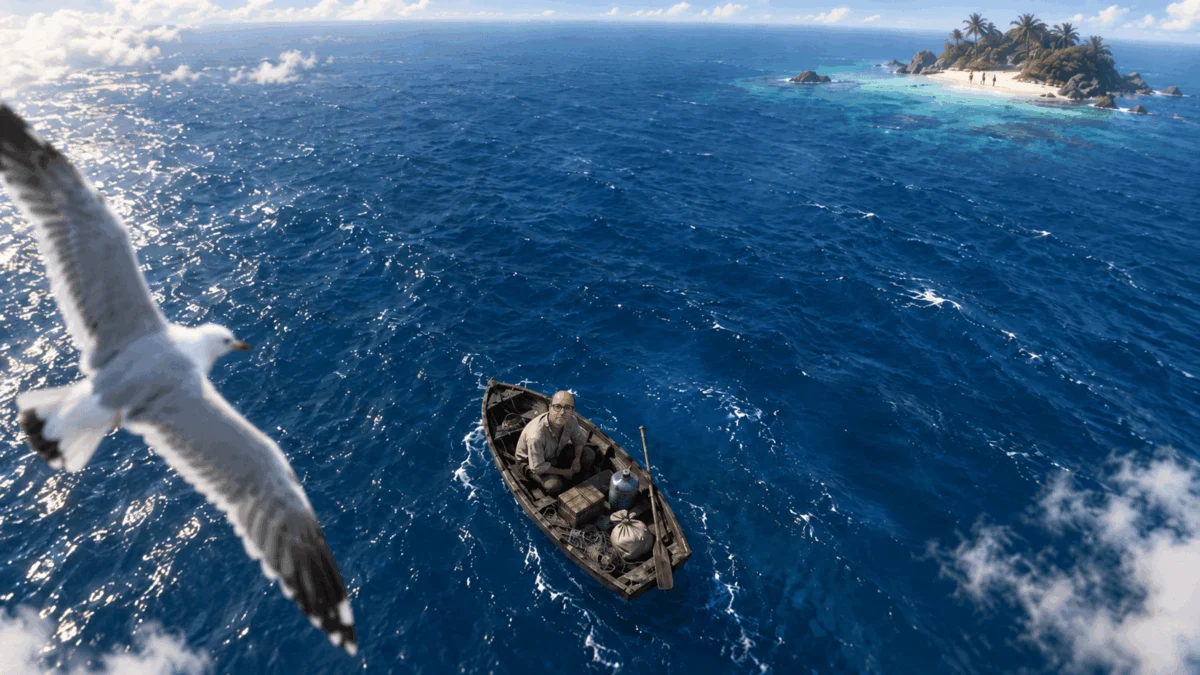
Create a cinematic, photorealistic, wide-angle aerial survival scene in a 16:9 landscape composition, output size 1200×675 pixels, intentionally moderate / slightly low resolution with natural photographic softness. The entire scene takes place in the middle of an enormous open ocean under bright tropical daylight. The viewpoint must be very high above the sea, as if we are literally seeing the scene through the eyes of a flying seagull. The camera should feel positioned at the seagull’s eye level, looking steeply downward at approximately a 60–70 degree angle, while still keeping a thin horizon line visible in the upper part of the frame.
In the extreme foreground on the left side of the image, show part of a large white-and-gray seagull flying very close to the camera, with one or both wings visible, slightly motion-blurred because of flight. The bird must clearly establish that the entire scene is being observed from the seagull’s point of view, but it must not cover the boat or dominate the image.
Far below, around the lower-middle section of the frame, place a very small, old, weathered wooden rowboat floating alone in the deep cobalt-blue ocean. The boat should look fragile, handmade, scratched, salt-worn and realistic, with visible wooden planks, rough edges, faded surfaces and signs of long exposure to seawater. The boat must appear extremely small compared with the vast ocean, emphasizing loneliness, vulnerability, distance and survival.
Inside the boat sits one solitary middle-aged man. Use the supplied reference portrait as the facial identity reference and reproduce his face as faithfully as possible: bald / closely shaved head, black round eyeglasses, realistic facial proportions, medium-light skin tone, mature appearance, neutral but slightly tired and thoughtful expression. Preserve his recognizable facial structure and glasses rather than inventing a different person. He should be looking upward toward the seagull/camera, as though noticing the bird above him. His expression should combine exhaustion, calmness, uncertainty and a subtle sense of hope.
Dress the man in simple, weathered survival clothing suitable for someone lost at sea: a faded beige-gray or dark neutral long-sleeve shirt, practical dark trousers, slightly worn fabric, no formal clothing, no suit, no luxury accessories. His posture should feel natural and believable: seated among his belongings inside the boat, slightly hunched from fatigue, not posing dramatically.
Fill the boat with a small number of realistic survival belongings, arranged naturally and somewhat disorderly: a wooden storage crate, a tied beige canvas sack, coiled rope, fishing net, one wooden oar resting along the side, a large blue-gray water container or canister, a small worn bag, a few basic tools and modest supplies. Do not overcrowd the boat. Every object should reinforce the idea that the man has been drifting for some time.
The ocean must occupy approximately 80–85% of the entire image. Use deep realistic blue water around the boat, with complex rolling waves, subtle foam, small whitecaps, sun glitter and realistic reflections. Include slightly lighter turquoise areas where the water becomes shallower in the distance, but do not make the entire ocean tropical turquoise. The water must look physically realistic, vast and slightly intimidating rather than decorative.
In the far upper-right section of the image, very distant from the boat and close to the horizon, place a small tropical island that appears almost unreachable. The island must be visually tiny because of the distance, surrounded by clear turquoise shallow water and subtle coral-reef tones. Include white sand, dark natural rocks, dense tropical vegetation and several tall palm trees moving gently in the sea breeze. The island should feel like a distant symbol of rescue and hope, not like a nearby vacation resort.
On the distant beach, include several adult women standing or walking near the shoreline. They should be extremely small because of the enormous distance, clearly recognizable only as adult female human silhouettes/figures, perhaps three to five people, wearing normal tropical beach clothing. They must not be sexualized, must not dominate the scene and must remain a subtle narrative detail showing that civilization or rescue may be present on the island. No children.
Composition is essential: place the small boat in the lower central third, the distant island in the upper-right third, the flying seagull partially entering from the left foreground, and the horizon high in the frame. The huge empty space of the ocean between the boat and island must be clearly visible to communicate the enormous distance. The visual story should immediately read as: a lone man lost at sea, seen from the eyes of a seagull, while a distant inhabited tropical island represents hope and possible rescue.
Lighting: bright late-morning or early-afternoon tropical sunlight, clear atmosphere with scattered soft white clouds near the horizon, sunlight sparkling across the left side of the water, realistic highlights on the waves, subtle atmospheric haze in the distance, physically plausible shadows and reflections. Avoid sunset; use a bright blue daytime ocean atmosphere.
Camera and photographic style: cinematic aerial documentary photography, realistic adventure-survival film still, high-altitude bird’s-eye perspective, approximately 24–28 mm wide-angle lens equivalent, strong depth and scale, deep focus across the ocean and distant island, with only slight foreground motion blur on the seagull. Use natural perspective, realistic atmospheric depth and convincing scale relationships.
Visual style: photorealistic, cinematic but restrained, realistic skin, realistic eyeglasses, believable anatomy, natural ocean colors, realistic wood texture, subtle high dynamic range, detailed but not hyper-sharpened, no fantasy elements, no surrealism, no cartoon appearance, no anime, no illustration, no painting, no artificial CGI look, no excessive saturation, no dramatic fantasy lighting.
Maintain the man’s identity from the supplied portrait throughout the generation; do not replace him with an East Asian or generic castaway face. The face should remain recognizable even though the camera is far above, with the bald head and black round eyeglasses serving as the strongest identifying visual features.
Final output: 1200×675 pixels, 16:9 aspect ratio, slightly low-resolution / compressed documentary-photo feeling, natural photographic softness, no text, no captions, no logos, no watermark, no decorative border. Avoid oversized boat, luxury yacht, motorboat, multiple boats, multiple men, close island, giant palm trees, oversized people on the beach, children, distorted anatomy, extra limbs, deformed face, missing glasses, duplicated objects, unrealistic ocean waves, floating luggage outside the boat, fisheye distortion, drone visible in frame, excessive HDR, oversaturated turquoise water, fantasy creatures, dramatic storm, nighttime, sunset, cartoon style or artificial-looking AI textures.
Son promptun Türkçesi
Sinematik, fotogerçekçi, geniş açılı bir havadan hayatta kalma sahnesi oluştur. Görsel 16:9 yatay kompozisyonda, 1200×675 piksel boyutunda ve bilinçli olarak orta/düşük çözünürlüklü, doğal fotoğrafik yumuşaklığa sahip olsun. Tüm sahne, parlak tropikal gün ışığı altında uçsuz bucaksız açık okyanusun ortasında geçsin. Bakış açısı denizin çok yukarısından, sanki sahneyi uçmakta olan bir martının gözlerinden görüyormuşuz gibi olsun. Kamera, martının göz hizasında konumlanmış hissi vermeli; yaklaşık 60–70 derecelik dik bir açıyla aşağı bakmalı, ancak kadrajın üst bölümünde ince bir ufuk çizgisi yine de görünür kalmalıdır.
Görselin en sol ön planında, kameraya çok yakın uçmakta olan büyük, beyaz-gri bir martının bir bölümü görünsün. Martının bir ya da iki kanadı kadraja girebilir ve uçuş nedeniyle hafif hareket bulanıklığı taşımalıdır. Kuş, tüm sahnenin martının bakış açısından izlendiğini açıkça hissettirmeli; ancak sandalı kapatmamalı ve görselin ana unsuru hâline gelmemelidir.
Kadrajın alt-orta bölümünde, çok aşağıda, derin kobalt mavisi okyanusta tek başına sürüklenen çok küçük, eski ve yıpranmış ahşap bir sandal yer alsın. Sandal kırılgan, el yapımı, çizilmiş, tuzdan aşınmış ve gerçekçi görünmelidir. Ahşap tahtalar, kaba kenarlar, solmuş yüzeyler ve uzun süre deniz suyuna maruz kaldığını gösteren yıpranma izleri belirgin olmalıdır. Sandal, devasa okyanusa kıyasla son derece küçük görünmeli; yalnızlık, savunmasızlık, mesafe ve hayatta kalma hissini güçlendirmelidir.
Sandaldaki tek kişi orta yaşlı bir erkek olsun. Verilen referans portreyi yüz kimliği için temel al ve yüzünü mümkün olduğunca sadık biçimde yeniden üret: kel veya çok kısa tıraşlı baş, siyah yuvarlak gözlükler, gerçekçi yüz oranları, açık-orta ten tonu, olgun görünüm, nötr fakat hafif yorgun ve düşünceli ifade. Farklı bir yüz üretmek yerine, kişinin tanınabilir yüz yapısını ve gözlüklerini koru. Adam, yukarıdaki martıya/kameraya doğru bakmalı; sanki üzerindeki kuşu fark etmiş gibi görünmelidir. Yüz ifadesi yorgunluk, sakinlik, belirsizlik ve hafif bir umut duygusunu aynı anda taşımalıdır.
Adamı, denizde kaybolmuş birinin giyeceği basit ve yıpranmış hayatta kalma kıyafetleriyle giydir: solmuş bej-gri veya koyu nötr tonlarda uzun kollu bir gömlek, kullanışlı koyu renk pantolon, hafif eskimiş kumaşlar; resmi kıyafet, takım elbise veya lüks aksesuar bulunmasın. Oturuşu doğal ve inandırıcı olmalıdır: eşyalarının arasında, sandalda oturmuş, yorgunluktan hafif öne eğilmiş; teatral veya poz verir gibi görünmemelidir.
Sandala az sayıda ama gerçekçi hayatta kalma eşyası yerleştir. Bunlar doğal ve hafif dağınık biçimde konumlandırılsın: ahşap bir saklama sandığı, bağlanmış bej renkli bez çuval, sarılı halat, balık ağı, sandalın bir kenarında duran tek bir ahşap kürek, büyük mavi-gri bir su bidonu veya matarası, küçük ve eskimiş bir çanta, birkaç temel alet ve mütevazı erzak. Sandal gereğinden fazla doldurulmasın. Her nesne, adamın bir süredir denizde sürüklendiği hissini desteklemelidir.
Okyanus, görselin yaklaşık %80–85’ini kaplamalıdır. Sandalın çevresinde derin ve gerçekçi mavi deniz kullanılmalı; karmaşık dalga hareketleri, hafif köpükler, küçük beyaz dalga tepeleri, güneş parlamaları ve gerçekçi yansımalar bulunmalıdır. Uzakta sığlaşan sularda hafif turkuaz tonlar görülebilir; ancak tüm okyanus tropikal turkuaz renge dönüştürülmemelidir. Su fiziksel olarak gerçekçi, uçsuz bucaksız ve hafif ürkütücü görünmeli; dekoratif bir deniz manzarası havasında olmamalıdır.
Görselin çok uzak üst-sağ bölümünde, sandaldan oldukça uzakta ve ufka yakın konumda, neredeyse ulaşılamayacakmış gibi görünen küçük bir tropikal ada yer alsın. Ada, mesafe nedeniyle görsel olarak çok küçük olmalı; çevresi berrak turkuaz sığ sular ve hafif mercan resifi tonlarıyla çevrelenmelidir. Beyaz kum, koyu renk doğal kayalar, yoğun tropikal bitki örtüsü ve deniz meltemiyle hafifçe hareket eden birkaç uzun palmiye ağacı bulunmalıdır. Ada, yakın bir tatil adası gibi değil; uzaktaki bir kurtuluş ve umut sembolü gibi görünmelidir.
Uzak kumsalda, kıyı şeridinde duran veya yürüyen birkaç yetişkin kadın yer alsın. Mesafenin büyüklüğü nedeniyle son derece küçük görünmeli; yalnızca yetişkin kadın siluetleri/figürleri olarak seçilebilmelidir. Yaklaşık üç ila beş kişi olabilir ve normal tropikal plaj kıyafetleri giymelidir. Cinselleştirilmemeli, görselin odağı hâline gelmemeli ve adada uygarlık veya kurtuluş ihtimali bulunduğunu anlatan küçük bir hikâye unsuru olarak kalmalıdır. Çocuk bulunmasın.
Kompozisyon çok önemlidir: küçük sandal alt-orta üçte birlik bölgede, uzak ada üst-sağ üçte birlik bölgede, uçan martı sol ön plandan kadraja kısmen girecek şekilde, ufuk çizgisi ise kadrajın üst kısmında konumlandırılmalıdır. Sandal ile ada arasındaki devasa boş okyanus açıkça görünmeli ve aradaki büyük mesafeyi hissettirmelidir. Görselin anlatısı ilk bakışta şu şekilde okunmalıdır: martının gözlerinden görülen, denizde kaybolmuş yalnız bir adam ve çok uzakta umut ile olası kurtuluşu temsil eden, insanların bulunduğu tropikal bir ada.
Aydınlatma: parlak geç sabah veya erken öğleden sonra tropikal güneş ışığı; temiz atmosfer, ufka yakın dağınık yumuşak beyaz bulutlar, denizin sol tarafında parlayan güneş yansımaları, dalgaların üzerinde gerçekçi ışık vurguları, uzakta hafif atmosferik pus, fiziksel olarak tutarlı gölgeler ve yansımalar. Gün batımından kaçınılmalı; parlak mavi gündüz okyanusu atmosferi kullanılmalıdır.
Kamera ve fotoğraf stili: sinematik havadan belgesel fotoğrafçılığı, gerçekçi macera-hayatta kalma filmi karesi, yüksek irtifadan kuşbakışı perspektif, yaklaşık 24–28 mm geniş açı lens eşdeğeri, güçlü derinlik ve ölçek hissi, okyanus ve uzak ada boyunca geniş netlik alanı; yalnızca ön plandaki martıda hafif hareket bulanıklığı. Doğal perspektif, gerçekçi atmosferik derinlik ve inandırıcı ölçek ilişkileri kullanılmalıdır.
Görsel stil: fotogerçekçi, sinematik ancak ölçülü; gerçekçi ten dokusu, gerçekçi gözlükler, anatomik olarak inandırıcı vücut yapısı, doğal okyanus renkleri, gerçekçi ahşap dokusu, hafif yüksek dinamik aralık, ayrıntılı ancak aşırı keskinleştirilmemiş görüntü. Fantastik unsurlar, sürrealizm, çizgi film görünümü, anime, illüstrasyon, resim efekti, yapay CGI görünümü, aşırı doygunluk veya dramatik fantezi ışığı kullanılmamalıdır.
Üretim boyunca adamın kimliğini verilen portreye sadık biçimde koru; onu Doğu Asyalı veya sıradan, rastgele bir kazazede yüzüyle değiştirme. Kamera çok yukarıda olsa bile yüz mümkün olduğunca tanınabilir kalmalıdır; kel baş ve siyah yuvarlak gözlükler en güçlü ayırt edici görsel unsurlar olarak korunmalıdır.
Nihai çıktı: 1200×675 piksel, 16:9 en-boy oranı, hafif düşük çözünürlüklü / sıkıştırılmış belgesel fotoğraf hissi, doğal fotoğrafik yumuşaklık. Görselde yazı, altyazı, logo, watermark/filigran veya dekoratif çerçeve bulunmamalıdır. Büyük sandal, lüks yat, motorlu tekne, birden fazla sandal, birden fazla erkek, yakın ada, dev palmiye ağaçları, kumsalda büyük boyutta görünen insanlar, çocuklar, bozuk anatomi, fazladan uzuvlar, deforme yüz, eksik gözlük, çoğaltılmış nesneler, gerçekçi olmayan okyanus dalgaları, sandal dışında yüzen bagajlar, balıkgözü lens bozulması, kadrajda görünen drone, aşırı HDR, aşırı doygun turkuaz deniz, fantastik yaratıklar, dramatik fırtına, gece, gün batımı, çizgi film stili veya yapay zekâya özgü yapay doku bozuklukları kullanılmamalıdır.
Yorumlar (0)